
Can A Visually Clean Surface Still Hide Dangerous Contamination?
One of the biggest challenges for healthcare personnel today is ensuring that all items that come into contact with patients are clean and free of dangerous organic contaminates. This includes any and all reusable medical devices, patient care equipment, over-bed tables, call buttons, stainless steel surfaces, touchscreens, keyboards, etc.1
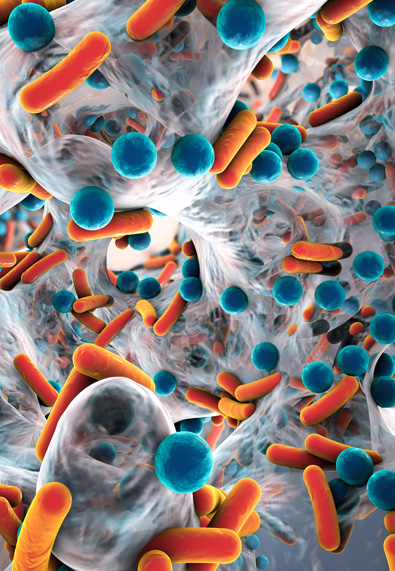
What makes this challenge all the more daunting for healthcare personnel is that visual inspection alone of those surfaces is no guarantee that the surface is free of dangerous, microscopic contaminates. This is because microscopic bioburden and biofilm are invisible to the human eye. These invisible contaminates are a major source of hospital acquired infections (HAIs), including surgical site infections (SSIs).
When it comes to surgical instruments, we’ve always been told that “If it isn’t clean, it can’t be sterile.” As readers of this blog know, the more accurate statement is that “If it isn’t clean, it can’t be safe.” The same axiom applies to any item or high-touch surface that comes into contact with a patient while they are in the healthcare facility. If the surface of an item is not free of microscopic contamination, it can be the cause of a dangerous HAI.
“A 2011 study found that of the 80% of high-touch surfaces that passed visual assessment, only 19% were found to be microbiologically clean (Ferreira et al., 2011). Another study found that of the 82% percent of the surfaces that passed visual inspection, only 30% were found to be microbiologically clean (Griffith et al., 2000). Common organisms found on theses surfaces include methicillin-resistant Staphylococcus aureus (MRSA), vancomycin-resistant enterococci (VRE), Acinetobacter baumannii and Clostridium difficile, to name just a few.”2
All high-touch surfaces in a healthcare facility that patients come in contact with or get close to are a concern. This is because these surfaces face a high probability of becoming contaminated by airborne bacteria or viruses from infected patients who touch or come in close contact with these surfaces. Steps taken by your healthcare facility to ensure the removal of all contaminates from high-touch surfaces and medical devices will have a positive impact on reducing HAIs and SSIs. Regrettably, visual inspection alone will not change infection rates.
According to AAMI ST 79 “Visual inspection alone may not be sufficient for assessing the efficacy of cleaning processes.” It goes on to state that “The use of methods that are able to measure organic residues that are not detectable using visual inspection should be considered in facility cleaning policy and procedures.”3 IAHCSMM points out in its CRCST Self-Study Lesson Plan, Understanding Biofilm, “Even with the use of most visual enhancing tools, microorganisms will still not be seen.”4
To help solve this problem, tests have been developed to help verify that cleaning quality standards have been attained. These tests include protein tests and adenosine triphosphate (ATP) bioluminescence tests, both of which test for residual soils and which might also be suggestive of biofilm formation. There are also reagent tests that test for protein and hemoglobin, and another 3-in-1 test for lumen devices that test for blood, protein and carbohydrates, all at the same time.
“ATP does not measure chemical efficacy,” says Maurits Hughes, director of logistics and support services at the University of Michigan Health System. “It measures cleaning efficacy. This means if organic material is measured by ATP, it cannot distinguish whether it is alive or dead.” ATP’s inability to distinguish between organic materials could undermine the overall success of your infection prevention program.”5
All organic cells, both living and dead, contain varying levels of ATP. A routine ATP test is not specific and measures the ATP from all sources, even including the residue from some types of cleaning agents. This is why ATP testing alone is not sufficient to ensure that a surface is completely free of infectious, living organic material that can be the cause of a serious HAI.
Ironically, even residues from some cleaning products can react with the ATP test, resulting in inflated or under-inflated results. “Bottom line: You should not rely on this test as an indicator of proper disinfection, even if it is a good tool to confirm that cleaning has been performed,” says Dr. Greene.6
In future blogs we will explore various methods and options to overcome the inherent deficiencies of ATP testing. At present, microbial sampling and culturing is the only way to know if your facility’s cleaning and disinfection processes are actually working. In the absence of such testing, it is impossible to know if you are adequately removing infectious contamination from high-touch surfaces in the OR, the ICU and other patient care areas.
Visual inspection alone does not ensure a clean, bioburden-free patient contact surface. This includes all patient care equipment, over-bed tables, call buttons, stainless steel surfaces, touchscreens, keyboards, etc. In the absence of a cleaning validation test, you cannot tell if a patient contact surface is free from infectious organisms. Always remember that “If it isn’t clean, it can’t be safe.”
1. The High Risks of High-Touch Surfaces, Weston Balch, Outpatient Surgery, November 2018 XIX, No. 11
2. Op. Cite.
3. AAMI ST 79 https://www.iahcsmm.org/publications/ansi-aami-st79.html
4. IAHCSMM Understanding Biofilm https://www.iahcsmm.org/images/Lesson_Plans/CRCST/CRCST159.pdf
5. The High Risks of High-Touch Surfaces, Weston Balch, Outpatient Surgery, November 2018 XIX, No. 11
6 Op. Cite.
December 20, 2018
6 view(s) 