
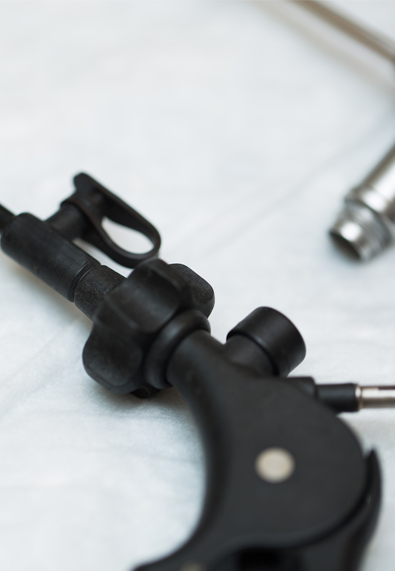
In Part I we reviewed the FDA’s latest Safety Communication on duodenoscopes that was issued on April 12, 2019. In that Safety Communication the FDA listed the patient infection risks, including the often fatal CRE, which are caused by the cleaning and sterilization challenges posed by these scopes. These problems have long been known to the FDA. Back in 2012 the FDA first learned about the potential association between multi-drug resistant bacteria and duodenoscopes.1
The FDA issued this latest Safety Communication to update the Safety Communication issued December 2018 regarding results from postmarket surveillance studies mandated under Section 522 of the Federal Food, Drug, and Cosmetic Act (“522 studies”) for duodenoscopes. In this Safety Communication, the FDA is also reminding healthcare facilities about the importance of strictly adhering to the manufacturer’s reprocessing and maintenance instructions, following best practices, and reporting adverse event information to the FDA.2
When it comes to cleaning these scopes, there are two major problems. First, it is difficult to manually clean the long, narrow inner tubing of the duodenoscope. Second, “unlike most endoscopes, duodenoscopes have a movable elevator-like mechanism at the tip that can be manipulated to adjust the position of surgical instruments. The mechanism makes the scope more versatile, but also more difficult to clean, as it contains microscopic crevices where bodily fluids and bacteria can lodge.”3
Reprocessing personnel have long been taught that “If it’s not clean, it can’t be sterile!” The more accurate statement is that “If it’s not clean, it can’t be safe!” From a patient safety standpoint, if you thoroughly clean a device, then sterilization, while important, almost becomes irrelevant. Any residual organic debris that remains on a device after reprocessing can become the source of a patient infection, even after sterilization. The more complex the device, the more difficult it is to clean and duodenoscopes are very complex devices.
“We’re not doing a great job in reprocessing the scopes,” More troubling is the fact that patients could be in danger of contracting other infections from duodenoscopes.4
When it comes to sterilizing duodenoscopes, there is a major problem that the manufacturers are struggling to address and solve. Specifically, given the delicate nature of the scopes and their complex mechanisms, they cannot withstand the high sterilization temperatures used on all other medical devices and instruments. Accordingly, it isn’t possible to ensure 100% bacteria kill on every reprocessing cycle.
Four years ago, an FDA advisory panel called for sterilization of duodenoscopes. This call by the FDA was prompted due to the continuing out breaks of infected patients caused by duodenoscopes that remained contaminated after reprocessing. “Today, steam heat — the gold standard for cleaning and sterilization — can still damage the scopes, creating cracks where bacteria can lodge and necessitating more frequent replacements.”5
In August of 2017 a regulatory report described a patient in a Boston hospital who was infected with colistin-resistant Klebsiella pneumoniae following endoscopic retrograde cholangiopancreatography. According to the report, the same duodenoscope that infected the patient had been used nine days earlier on a patient already infected with this super bug.6
Upon further investigation, it was found that the duodenoscope had been cleaned according to the manufacturer’s guidelines and FDA recommendations. The duodenoscope in question was sent back to the manufacturer and taken apart. During their investigation, the manufacturer discovered an internal design defect that left bacteria and organic debris clinging to the instrument.
Upon discovering the internal defect, the manufacturer spent several months trying to redesign the duodenoscope. Having failed to correct the internal design flaw, the manufacturer removed the scope from the market. “There is really no way we could have been able to pick up on these internal defects — that’s one of the main takeaways of this story,” said Dr. Erica S. Shenoy, the associate chief of infection control at Massachusetts General Hospital.7
Dr. Shenoy’s observation that “There is really no way we could have been able to pick up on these internal defects….” clearly points out the problem of using any medical device or instrument whose cleaning IFUs have not been validated.
1 FDA Safety Communication: “The FDA Continues to Remind Facilities of the Importance of Following Duodenoscope Reprocessing Instructions” April 12, 2019 https://www.fda.gov/medical-devices/safety-communications/fda-continues-remind-facilities-importance-following-duodenoscope-reprocessing-instructions-fda
2 Op. Cite.
3 New York Times: “Why These Are Medical Instruments So Tough to Sterilize? Roni Caryn Rabin, August 6, 2019
4 Op. Cite.
5 “A Duodenoscope Has Been Linked to ‘Probable Transmission’ of a Colistin-Resistant Superbug” Discussions In Infection Control, December 8, 2017, Lawrence F Muscarella PhD
6 New York Times: “Why These Are Medical Instruments So Tough to Sterilize? Roni Caryn Rabin, August 6, 2019
7 Op. Cite.
August 23, 2019
8 view(s) 