
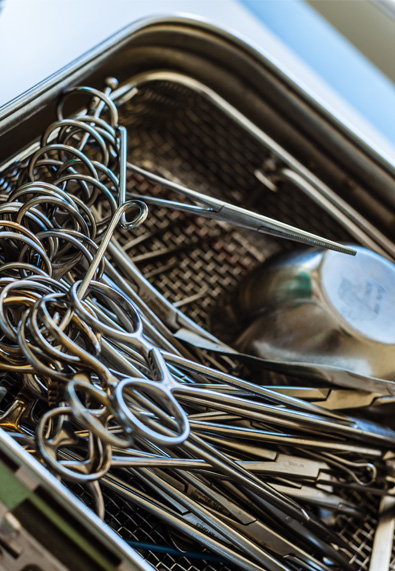
The Importance of Sterile Packaging Systems on Patient Safety
In previous blogs we’ve discussed the importance of having clean, sterile, moisture-free instruments for every patient, every time. Achieving this goal is crucial when trying to minimize patient risk and patient harm caused by contaminated instruments and reusable medical devices.
CS/SPD reprocessing personnel have always been told that “If it’s not clean, it can’t be sterile.” The more accurate statement is that “If it’s not clean, it can’t be safe!” Just because you sterilize a device does not mean that it is safe to use, especially if it becomes contaminated within the sterile packaging system pre-or-post sterilization.
A sterile packaging system can become contaminated through excessive or rough handling; accidental dropping; harsh contact with another package or medical device. Regardless of the cause of the packaging system failure, the contents of the package must be considered contaminated and returned for reprocessing.
The following recommendations for the evaluation, selection and use of sterile packaging systems for reusable surgical instruments and medical devices that are routinely sterilized were developed by the Association of Perioperative Registered Nurses (AORN) Recommended Practices Committee.
These recommended practices from the AORN are intended as guidelines that can be adapted to your specific practice:
- Packaging systems should be evaluated before purchase and use to ensure that items to be packaged can be sterilized by the specific sterilizers and/or sterilization methods to be used.
- Packaging systems should be compatible with the specific sterilization process for which it is designed.
- Packaging materials should be stored and processed to maintain the qualities required for sterilization.
- Package contents should be assembled, handled and wrapped in a manner that provides for an aseptic presentation of package contents.
- Paper-plastic pouch packages should be used according to manufacturer's written instructions.
- Design, material and construction of the containment device (e.g., rigid containers, instrument cases/cassettes, organizing trays) should be considered before selection, purchase and use.
- Packages to be sterilized should be labeled.
- Sterilized packages should be considered sterile until an event occurs to compromise the package barrier integrity.
- A chemical indicator/integrator should be placed inside each package and external chemical indicator affixed outside each package to be processed.
- The healthcare organization's quality management program should include sterile packaging selection and use.
- Personnel should demonstrate competence in the use of sterilization packaging systems and accessories.
- Policies and procedures for the selection and use of packaging systems should be written, reviewed periodically and readily available within the practice setting.1
October 27, 2017
7 view(s) 