
Preventing The Problem With Biofilms
In May of this year we examined the initial news report on a hospital that had an outbreak of contaminated surgical instruments. Last month we examined a new report that cited biofilms as the probable cause of the contaminated surgical instruments.
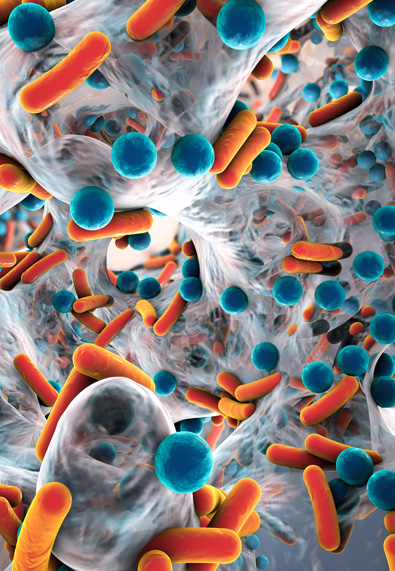
A biofilm is an assemblage of surface-associated microbial cells that is enclosed in an extracellular polymeric substance matrix, more commonly referred to as ‘slime.’ In 1684 Van Leeuwenhoek, using his simple microscopes, first observed microorganisms on tooth surfaces and can be credited with the discovery of microbial biofilms. However, a detailed examination of biofilms would await the electron microscope, which allowed high-resolution photomicroscopy at much higher magnifications than did the simple light microscope.
When it comes to preventing the formation of biofilms on devices and instruments, the current AAMI guidelines state:
6.3.1 Handling of instruments during surgical procedure
Throughout the surgical or invasive procedure:
a) Instruments should be wiped, as needed, with sterile moistened surgical sponges to remove gross soil; and
b) Cannulated instruments or instruments with lumens should be irrigated with sterile water, as needed, without creating aerosols.
Rationale: Blood, other bodily fluids, and saline are highly corrosive and can cause pitting of instruments. If left to dry, they can be difficult to remove and can prevent sterilization. Cannulated instruments or instruments with lumens can become obstructed with organic material. Irrigating these instruments with sterile water helps remove residue.
Preparation for decontamination of instruments should begin at the point of use. To prevent the formation of biofilm and to reduce the risk of corrosion, cleaning and decontamination should occur as soon as possible after instruments and equipment are used.
Biofilm consists of an accumulated biomass of bacteria and extracellular material that is tightly adhered to a surface and cannot be removed easily. Biofilm has the effect of protecting microorganisms from attempts to remove them by ordinary cleaning methods used in the sterile processing area and of preventing antimicrobial agents, such as sterilants, disinfectants, and antibiotics, from reaching the microbial cells.
Biofilm can form on many surfaces but is particularly problematic in devices with lumens. Once biofilm forms on a surface, direct friction and/or oxidizing chemicals are required to remove the biofilm.1
According to some manufacturers of instruments that can be taken apart, their major benefit is that once they've been disassembled, you can 'visualize' the bioburden and biofilm inside of the instrument and manually remove it.
Being able to 'visualize' the inside of an instrument does NOT ensure a clean, sterile, moisture-free instrument (assuming that reprocessing personnel even remember to take the time to disassemble, thoroughly clean it and then properly reassemble the instrument).
The only way to ensure clean surgical instruments on every reprocessing cycle is to only use instruments whose cleaning IFUs have been validated.
Protecting your patients from harm caused by a contaminated instrument starts by following manufacturers’ published cleaning and reprocessing IFUs. Even more important than following the manufacturers’ published IFUs is to demand IFUs that have been validated by independent laboratory testing using AAMI and FDA test protocols. By using instruments with validated IFUs you and your staff can have the documented assurance of providing clean, sterile, moisture-free instruments for every patient, every time!
1. AAMI Standards, www.aami.org/standards
July 12, 2018
10 view(s) 