
Have ‘Modular’ Instruments Lowered Surgical Infection Rates?
Part I
Data from the CDC indicate that surgical infections cause over 30,000 patient deaths annually. A significant number of these infections are caused by surgical instruments that are difficult, if not impossible, to thoroughly decontaminate, clean and sterilize. Contaminated surgical instruments have always been and continue to be a significant cause of surgical infections.
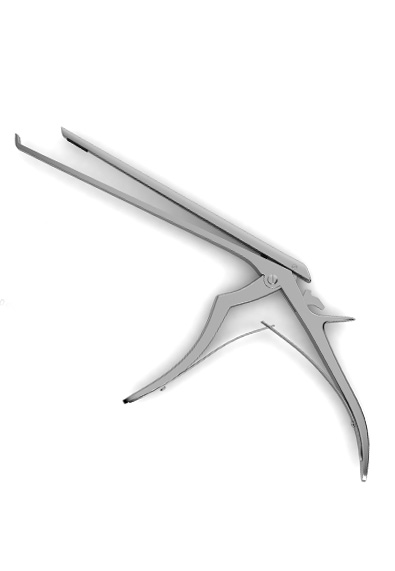
In an effort to reduce the risk of a surgical infection caused by a difficult to clean surgical instrument, a number of surgical instrument companies began to introduce ‘modular’ instruments that could be disassembled for internal cleaning during reprocessing. Modular laparoscopic instruments were first introduced 25 years ago and modular Kerrisons were introduced approximately 10 years ago.
According to the manufacturers’ of modular instruments that have to be disassembled in order to decontaminate and clean, their major benefit is that once they've been disassembled, you can 'visualize' the bioburden inside of the instrument and manually remove it. Regretfully, the human eye is not capable of seeing microscopic bacteria and biofilm on the surface of a surgical instrument.
During a recent discussion about modular instruments with a surgeon, he made a very interesting observation. His comment was that modular instruments were supposed to be easier to clean which in turn would reduce the rate of surgical infections. But he wondered where all of the studies and clinicals were that proved that modular instruments have reduced surgical infections over the last decade? Most certainly device makers would use this point to their advantage.
The simple answer to the surgeon’s question is that modular instruments have not been shown to reduce the frequency or the rate of surgical infections caused by contaminated instruments. Being able to 'visualize' the inside of a modular instrument does not necessarily ensure a clean, sterile, moisture-free instrument (assuming that the reprocessing personnel know how, or even remember to take the time to disassemble, thoroughly clean it and then properly reassemble the instrument).
“A major limitation of many manufacturers’ IFUs is that they require a CS/SPD professional to visually inspect an instrument after cleaning for bioburden and/or biofilm prior to sterilization. For some complex instruments that means disassembling them to both clean and inspect. But the dirty little secret is that this residue is invisible to the naked eye — making the task physically impossible.”1
Logic dictates that if modular instruments were truly effective in reducing surgical infections (SSIs), we would have seen a reduction in surgical infections. However, according to the CDC, “Advances in infection control practices include improved operating room ventilation, sterilization methods, barriers, surgical technique, and availability of antimicrobial prophylaxis. Despite these activities, SSIs remain a substantial cause of morbidity and mortality among hospitalized patients.”2
As readers of this blog know, the only way to ensure clean surgical instruments on every reprocessing cycle is to only use instruments whose cleaning IFUs have been validated. Such validation must be done in accordance with FDA mandated validation testing protocols described in 21 CFR 820.3(k) “Validation of Reprocessing Methods in Accordance with the Quality System Regulation.”
Key point: There is no good way to ensure 'repeatability' of cleaning results with a reusable surgical instrument that relies on manual disassembly and cleaning to remove bioburden, especially microscopic bioburden and biofilm that is not visible to the human eye.
So how does the lack of validation of modular surgical instruments apply to you, to your healthcare facility and to your patients? Unless a surgical instrument manufacturer has validated that its cleaning process removes the bioload from the instrument, you have no assurance that you are sending a clean, sterile and safe instrument back to the OR.
1 “Validated? It’s complicated” by Kara Nadeau, HPN, April 2017
2. CDC “Guideline For Prevention Of Surgical Infection”
August 31, 2018
7 view(s) 