
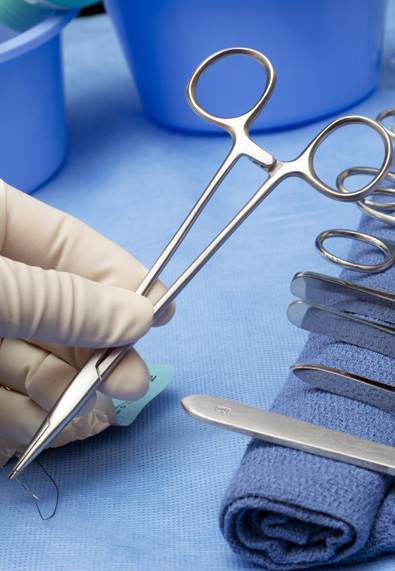
Creating and Maintaining a Sterile Field for Surgical Instruments: Part I
Creating and maintaining a sterile field for surgical instruments during a case is vital to minimizing the risk of a surgical infection caused by a contaminated instrument. To achieve this goal, all of the surgical team members must faithfully adhere to the principles of aseptic technique and utilize those principles on every surgical procedure.
The following principles and techniques follow many of the recommendations of the Association of Surgical Technologists (AST) and they are designed to help create and maintain the sterile field in the perioperative setting.1 By following these principles and recommendations, the risk of a surgical infection will be reduced along with waste and the additional costs incurred when the sterile field is broken and additional instruments are required.
Prior to the start of a case, the Certified Surgical Technologist (CST) should check and confirm that all of the necessary instruments, supplies, and equipment needed to prepare the sterile field for the surgical procedure are present and readily available. The CST should also cross-check the surgeon’s preference card against the instruments, supplies, and equipment that have been pulled for the procedure to confirm that everything that will be needed for the procedure is available.
All surgical team members must at all times strictly adhere to aseptic technique when opening sterile instrument sets, packages and peel packs. Team members should place sterile items based on where they will be used in the OR. For example, the back table pack should be placed on the back table, the basin placed in ring stand, instrument sets placed on flat surfaces, skin prep tray placed on prep table, etc. In all instances, the items should be placed on clean, dry surfaces. Packs, trays and miscellaneous items that will not be immediately opened, such as sterile dressing supplies, should be placed where they will be easily accessible by the circulator.
According to the AST’s Standards of Practice, “prior to opening a sterile item, the following should be verified:
- The external chemical indicator or integrator has changed color indicating the item has been exposed to a sterilization process.
- The integrity of the packaging material is intact (e.g. no perforations, tears or evidence of strike-through)
- Confirm expiration date, if present.2
- The following is a recommended sequence for opening sterile items:
- Back table pack
- Basin set
- Small wrapped items (e.g. sterile towel pack)
- Peel pack items, including suture
- The CST’s gown and gloves should be opened on a separate flat surface, such as the mayo stand.
- Small wrapped items, peel packs and suture packets should be opened and “flipped” onto the sterile field using aseptic technique. The glued area of peel packs and suture packets is considered the boundary between non-sterile and sterile. Items should be opened in such manner that the non-sterile person is not extending over the sterile field.3
-
Read Part 2 here
- AST Standards of Practice for Creating the Sterile Field
- AST Standard of Practice III, 2.0
- Op Cite
September 24, 2017
7 view(s) 