
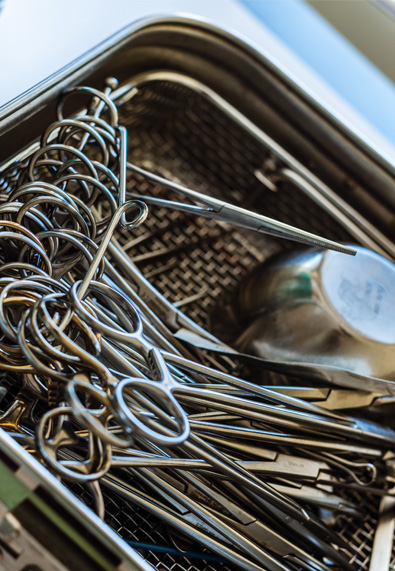
Can your hospital modify medical equipment or a surgical instrument that it purchased, paid for and legally owns? Can you modify or alter an instrument or piece of equipment to ‘improve’ its performance or ‘customize’ it for the needs of a specific patient? Questions like these come up rather frequently and there are no clear cut answers, nor are there a lot of published guidelines on how to handle such a request.
Medical equipment and surgical instrument modification questions were the topic of a recent series of posts on the AAMI Member Discussion Group Digest. The discussion started with this question “I'm wondering if anyone has developed a policy or process by which they allow modifications to be made to instruments or medical equipment under certain circumstances. Has anyone ever determined a case where they thought the benefits of a modification would outweigh the risks and liability that would be taken on by the organization?” University of ________ Hospitals and Clinics1
The question prompted this response “I would highly advise against modifying any FDA approved piece of medical equipment or instrument. If the modification is required I would suggest working with the current manufacturer to make suggestions for their future model.” Manager, Clinical Engineering, University of ____________ Medical Center2
This question also prompted this well written response “If you are in a situation that modifying an instrument or a piece of medical equipment is a thought/concern then it is probably time to retire that specific instrument or device and recommend a suitable replacement. We have a responsibility to the patients. I have on numerous times removed devices from service and deemed them unsafe for patient use. I have never yet received any push back from leadership when doing this.” General Medical Center3
There were a surprisingly large number of responses to the medical equipment/instrument modification question that was asked. Most of the responses were straight forward in stating that it was not a good idea due to all of the regulatory and liability issues that a modification would potentially entail. There were however a number of responses like the one from Lawrence that offered some good advice if you do decide that you want to investigate a potential modification or alteration.
“I think it is difficult, if not impossible, to fully understand the potential ramifications of what might appear to be a minor modification to an instrument or medical device. But it may also be a reasonable risk based on the benefit to the patient or the organization. The first step would be to contact the manufacturer to discuss why you think the modification should be made. They might even agree and add the change to a future release. Regardless, you should spend time with your organization's legal counsel and medical director before proceeding.” Senior Vice President, ___________ Healthcare Technologies4
If you’re thinking about modifying an instrument or a device, then contacting the instrument/device manufacturer should always be your first step. No one knows more about the product than the manufacturer and if anyone can quickly and accurately evaluate the feasibility and associated risks of your proposed modification, the manufacturer can.
Another major reason to always contact the instrument/device manufacturer has to do with the liability issues that will automatically accompany any modification. “Our policy is to never, ever rig equipment so that it functions differently from the manufacturer's specs or bypasses potential safety engineering. In the event of a product malfunction or an injury to the patient or provider, while using a jury-rigged device, you will probably assume total liability.” Director, Infection Prevention, __________ Healthcare System (5)
Please note that this statement “you will probably assume total liability” is incorrect. The correct statement is that you and your facility will assume total liability in the event of patient harm, injury or death. The FDA is very clear as to the legal definition of a medical device/product manufacturer which is:
(o) Manufacturer means any person who designs, manufactures, fabricates, assembles, or processes a finished device. Manufacturer includes but is not limited to those who perform the functions of contract sterilization, installation, relabeling, remanufacturing, repacking, or specification development, and initial distributors of foreign entities performing these functions.6
So what is the best course of action in your facility if someone suggests modifying a medical device or surgical instrument in your facility? Short answer, Do Not Modify or Change the function or operation of an FDA approved medical device, especially if it contacts a patient without first contacting the manufacturer. If the manufacturer says that your proposed modification is feasable and safe, request a letter of approval and authorization from them.
While a physician can legally request/oversee/prescribe a modified medical device or an instrument for a specific patient, you should still contact the manufacturer to obtain their input. In addition to contacting the manufacturer, so should also contact hospital administration, infection control, risk management, legal counsel and the medical director.
Everyone has a legal, moral and ethical responsibility to protect patients. Modifying a surgical instrument or medical device without the input and written approval from the manufacturer is an invitation to patient harm and a potential lawsuit.
1 AAMI Member Discussion Group Digest, September 17, 2019
2 AAMI Member Discussion Group Digest, September 19, 2019
3 AAMI Member Discussion Group Digest, September 20, 2019
4 AAMI Member Discussion Group Digest, September 24, 2019
5 AAMI Member Discussion Group Digest, September 27, 2019
6 CFR - Code of Federal Regulations Title 21, Part 820, Definitions, Quality System Regulation, Section 820.3
October 11, 2019
62 view(s) 