
What's Inside Of The Instruments That Are Used Inside Of Your Patients?
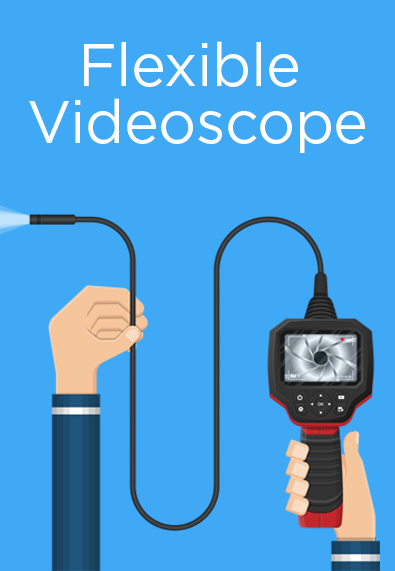
A recurring question that haunts CS/SPD personnel after reprocessing is whether or not they have removed all of the organic debris and biofilm from the inside of their lumened and cannulated instruments. With the increased miniaturization of flexible borescopes, it is now possible to visualize the inside of lumened and cannulated instruments during reprocessing.
When it comes to surgical instruments, we’ve always been told that “If it isn’t clean, it can’t be sterile.” As readers of this blog know, the more accurate statement is that “If it isn’t clean, it can’t be safe.” This is especially true of surgical instruments that have lumens or cannulas. If the internal surface is not free of microscopic contamination and biofilm, it can be the cause of a dangerous, painful and costly surgical infection.
Here's some key information from a recent post in Outpatient Surgery.
“So what is going on inside of your device and instrument channels and lumens? If only you could see, there's moisture, debris, discoloration and scratches. Bioburden is building up. But how do you know? The answer: a borescope, which uses a small but durable high-resolution insertion tube to examine the full length of each lumen inside your equipment so you can verify what is happening in the ‘dark places and spaces.’ It does so with a small display unit that is easy for your department staff to set up, use and document findings.”1
The post references photos of the inside of endoscopes that were taken after they had been reprocessed and considered ready for patients. The scopes had what appeared to be scratches, kinks and residues on the interior.
The single biggest advantage of using a borescope is that it allows CS/SPD personnel to finally see what is inside of the instruments that are used inside of their patients. Being able to visualize organic debris is a major patient safety advantage. No CS/SPD department would knowingly return an instrument to surgery that was visually contaminated with organic debris.
The use of a borescope does however add an additional step to the reprocessing cycle. In most facilities, after the lumened and cannulated instruments have been decontaminated and thoroughly cleaned, they are then evaluated using the borescope. Based on what is seen inside of the instrument, it is either sent back for further cleaning, or if the contamination is too great, it is sent out for repair or even replacement.
One of the greatest challenges for CS/SPD personnel is ensuring that all surgical instruments are clean and free of dangerous organic contaminates after reprocessing, especially lumened and cannulated instruments. What makes this challenge all the more daunting is that visual inspection alone of those surfaces, even with a borescope, is no guarantee that the surface is free of dangerous, microscopic contaminates. Even with the aid of a borescope, microscopic bioburden and biofilm within the instrument are still invisible to the human eye. These invisible contaminates continue to be a major cause of surgical infections.
Regretfully, most CS/SPD departments simply do not have the time or the staff to borescope every lumened or cannulated device on every reprocessing cycle. Equally daunting is the fact that when you do see debris inside the lumen, getting it out is often difficult, if not impossible, due to corners, crevasses and dead spaces found inside of most lumened and cannulated instruments.
While a borescope is useful in visualizing the problem of large, residual debris within an instrument, it does not remove the debris from within the instrument. When purchasing surgical instruments (especially lumened and cannulated instruments), it's best to ensure that the manufacturer has validated the fact that their cleaning instructions for use (IFUs) actually work to remove organic debris on every reprocessing cycle. To be reliable, the validation study must have been done by an independent laboratory using AAMI and FDA testing protocols.
Even by inspecting every instrument with a borescope after every reprocessing cycle, if the manufacturer has not validated the cleaning IFUs, you could still run the risk of sending contaminated devices up to the OR.
1. “Infection Prevention: Borescopes: Your Eyes on the Inside” Outpatient Surgery, December, 2018, XIX, No. 12
2. Op. Cite.
January 30, 2019
8 view(s) 